Destination briefing
Why travelers stop here
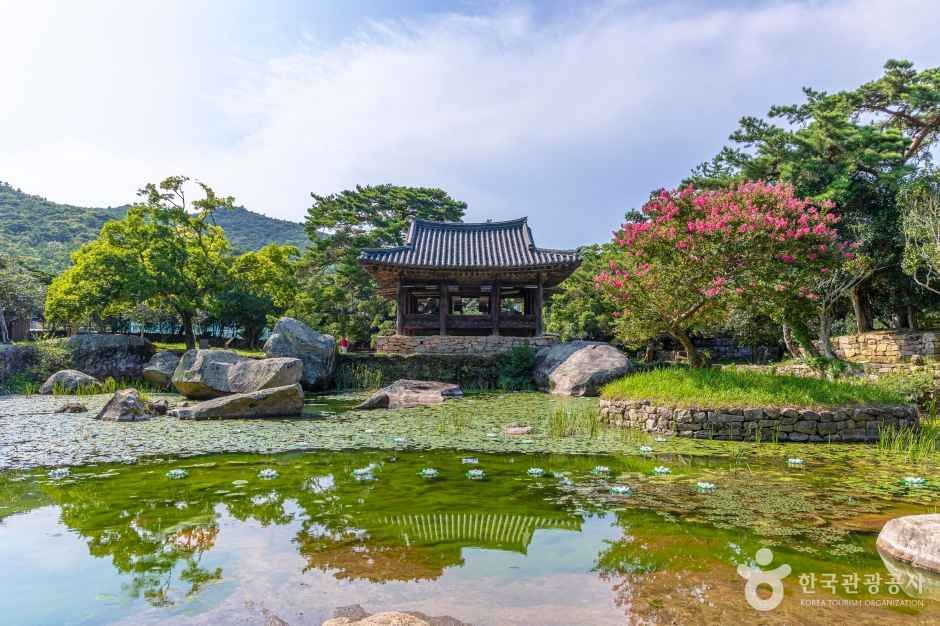
Dongcheonseoksil is located on the mountainside directly facing Naksseojae, offering a panoramic view of Buyong-dong, which in Neo-Confucianism is considered a fairyland where immortals dwell. It occupies an area of 3,306m² (about 1,000 pyeong) and features a single pavilion, a stone gate, a stone pond, a stone stream, a stone waterfall, and a stone field, where people once drank tea and composed poetry. The name Dongcheonseoksil originates from the term Dongcheonbokji (洞天福地), referring to a renowned scenic spot under heaven where immortals live, and it is the highest pavilion in the area, built for rest and reading. In the stone pond, water lilies were planted, and the pond was divided into two parts with an artificial hole and a bridge called Huihwanggyo to allow water to flow in and out. Even today, in front of the stone chamber, there remain Yongduam (Dragon Head Rock), where a pulley was once installed, and Chabawi (Tea Rock), where tea was brewed and drunk. It takes about 5 minutes by car from the Yun Seon-do Garden ticket office to the entrance of Dongcheonseoksil, and then about 20 minutes of hiking uphill from the entrance to Dongcheonseoksil. On Fridays, Saturdays, and Sundays, a cultural commentator is stationed at Seoyeonjeong, so it is recommended to listen to explanations about Dongcheonseoksil, Goksudang, and Naksseojae before visiting. Address: Jeonnam Gwangju Special Metropolitan City, Wando-gun, Bogil-myeon
OTA-ready stop
Built into inbound routes and day-tour planning.
Local context
전남광주통합특별시 완도군 보길면
Travel fit
Attraction · Jeollanam-do


![[Early bird] Elysian Gangchon Ski Tour from Seoul (5 pick-up points)](/_next/image?url=https%3A%2F%2Fadmin.holidaykr.com%2Fapi%2Fadmin%2Fsystem%2Fbasic-settings%2Ffavicon%3Fpath%3D%252Fuploads%252Fproducts%252Fthumbs%252F750_1785201339504_file1.jpg&w=3840&q=75)