
South Gyeongsang in detail: Tongyeong, Namhae, Geoje, Jinju, Hadong, Changwon-Jinhae, Haeinsa, the Gaya sites and Tongdosa, with bus and rail times, dated October 2026 events and 3- and 5-day routes.
Overview
South Gyeongsang, usually called Gyeongnam, is the part of Korea’s south coast between Busan and Jeolla. It has a deeply indented shoreline, hundreds of islands inside Hallyeo Maritime National Park, quiet tea country along the Seomjin River, and two of Korea’s great Buddhist heritage sites, Haeinsa and Tongdosa. The provincial capital is Changwon, and the biggest cities are Changwon, Gimhae, Jinju, Yangsan, Geoje and Tongyeong.
The area suits travelers who like sea views, seafood, naval history and slow driving. The story of Admiral Yi Sun-sin and the 1592–1598 Imjin War runs through Tongyeong, Hansando, Namhae and Jinju, and gives the trip a thread. Tongyeong was named South Korea’s first specialized night-tourism city in 2022. The Eden Valley ski resort in Yangsan is covered in the ski guides, not here.
Plan three days for Jinju and Tongyeong with a day on an island or in Geoje, or five days to add Namhae and Hadong. Road trips are the best way to link the coast, but buses between the main towns are frequent enough that you can do the core route without a car.
Best time to go
Spring is the headline season: Hwagae’s cherry-blossom road in late March and early April, the ten-day Jinhae Gunhangje cherry festival in early April, and the green start of the tea harvest in the Seomjin valley in April and May. Autumn is the second best, with clear skies for island views, the Jinju lantern festival in October, and color on the mountains around Haeinsa.
Namhae has a mild, wet maritime climate: the January daily mean is about 2 °C, August about 26 °C, and annual rainfall about 1,900 mm, mostly in summer. Summer brings humidity, the monsoon and typhoon risk in August and September, but also beach weather and ferry-based island days. Winter is quiet and good for oysters, though cold sea wind makes exposed viewpoints uncomfortable.
Weekends in cherry-blossom weeks and the first half of October are the busiest, with long taxi queues and traffic on the roads into Jinhae and Jinju. If you can, go midweek, and book accommodation near the festival grounds well in advance.
Getting there
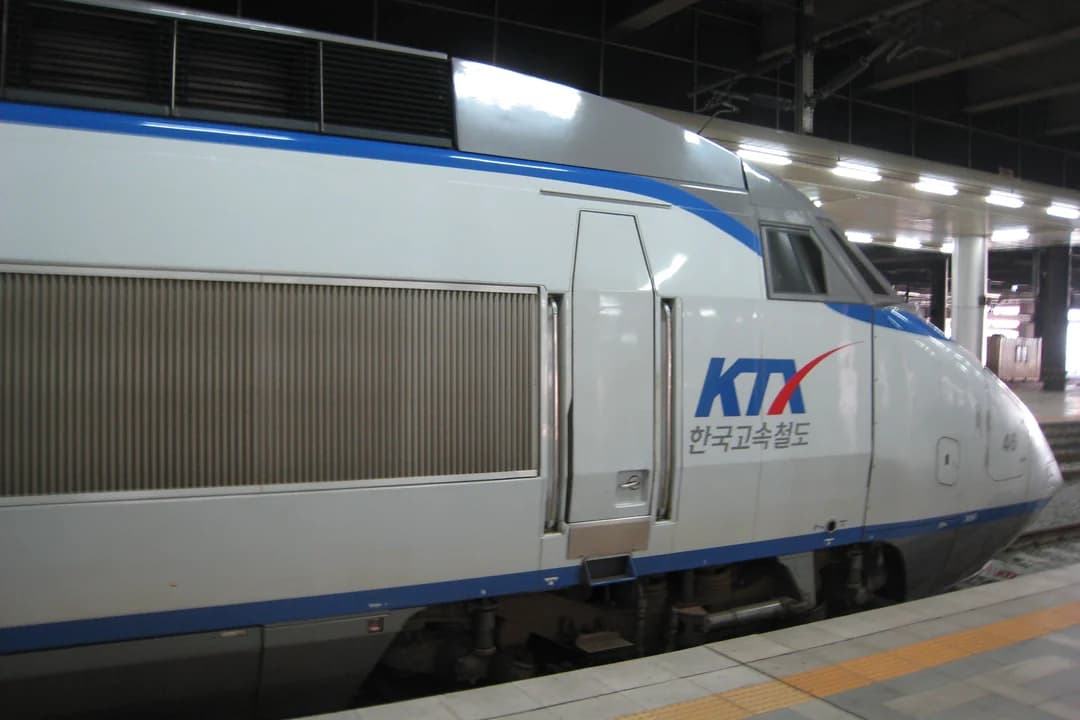
KTX trains on the Gyeongjeon line reach Jinju in about 3 h 15 min to 3 h 30 min from Seoul, and a Suseo-to-Jinju KTX service has run since September 2023; In the September 2023 timetable Jinju had 8 KTX each way from Monday to Thursday and 11 from Friday to Sunday. Changwon Jungang Station also has KTX services from Seoul and, from 1 September 2026, a Suseo service with four round trips a day (as of 2026-10-11).
Express buses connect the smaller towns that have no train. From Seoul, Tongyeong is about 4 h 10 min by bus and Jinju about 3 h 35 min. From Busan’s Sasang terminal, a direct bus to Tongyeong takes about 1 h 30 min and a bus to Jinju about 1 h 20 min, and Jinju to Tongyeong is about 1 h 10 min. Services run every 10 to 35 minutes on the busy Busan-Jinju route (as of 2026-10-11).
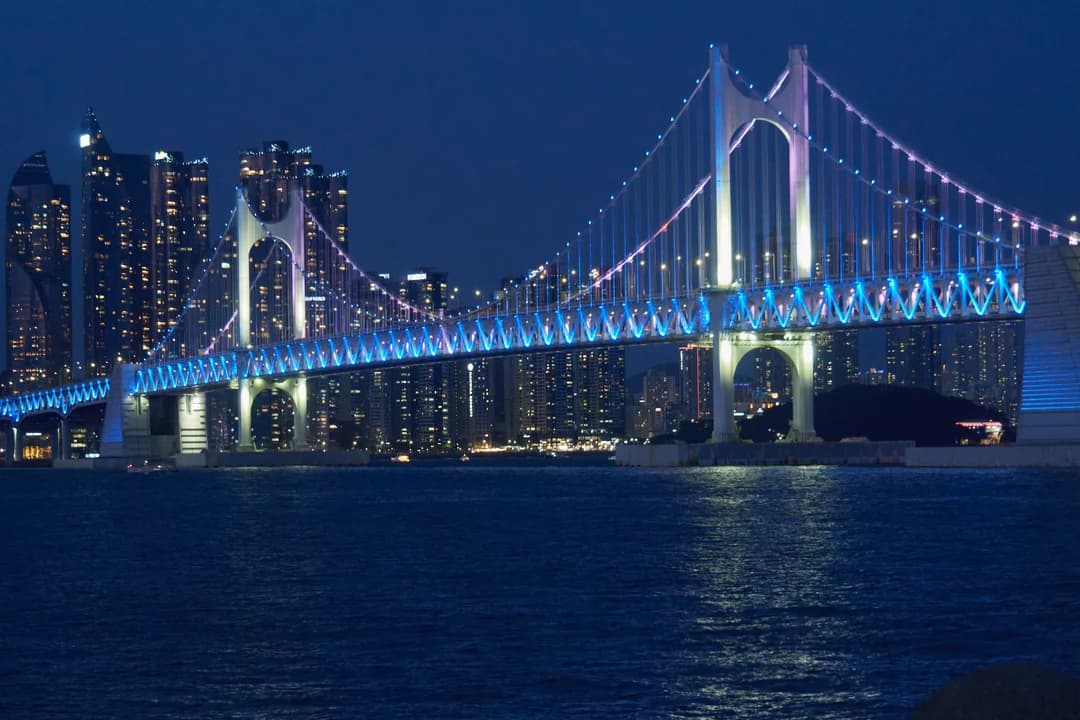
Gimhae International Airport near Busan is the main gateway, with Sacheon Airport serving domestic flights near Jinju. The Busan-Geoje link, opened on 13 December 2010, is a bridge-and-tunnel route of 8.2 km, including a 3.2 km immersed tunnel, and cut the trip from Busan to Geoje from about 210 minutes by road, or 120 minutes by ferry, to around 40 minutes. This makes Geoje an easy half-day trip from Busan.
Getting around
The region is best seen by chaining bases: Jinju, Tongyeong, Namhae and Hadong, each reached by bus from the last, with a taxi or local bus for sights within a town. Terminals are usually in the center of town. Jinju’s intercity terminal is near the lantern-festival grounds, and the city’s express bus terminal is within walking distance of them, but Jinju Station is away from the center, so plan a taxi or the festival shuttle.
Bridges tie several islands to the mainland. Namhae is linked by the Namhae Bridge across the Noryang strait and by the Changseon-Samcheonpo Grand Bridge, Geoje by the Busan-Geoje link and a bridge near Tongyeong. Hansando, Maemuldo and Oedo need boats. The ferry from Tongyeong’s passenger terminal to Hansando runs about once an hour, and ferries for Maemuldo leave from Jeogu port on Geoje and from Hansando.
Show Hangul names to taxi drivers, and ask the driver for the return pick-up number if your sight is remote, because taxis are scarce at places such as Darangi Village or Boriam. Rental cars suit Namhae and Hadong; expect narrow coastal roads and stop to enjoy the views at the pull-offs rather than on the carriageway.
Tongyeong: harbor, murals and the cable car
Tongyeong is the gateway to the Hallyeo Maritime National Park, designated on 31 December 1968, and the city covers 41 inhabited and 110 uninhabited islands. Its name goes back to the Joseon naval command post (tongjeyeong) based here. The harbor of Gangguan is the heart of the old town, with a market, seafood restaurants and an evening promenade. Tongyeong is nicknamed the Naples of the East and has a population of about 121,000 (September 2026).
Dongpirang (동피랑) is a hillside village behind the central fish market. It was meant to be demolished in 2007, but a mural competition that October by a local citizens’ group covered its walls with paintings and turned public opinion, and only three houses at the top were removed. The lanes are steep and short, so allow an hour, and go early or late for fewer people and a good view of the harbor.
The Hallyeo Waterway cable car climbs Mireuksan on a line of 1,975 m in about 10 minutes to an upper station at roughly 461 m, with views across the park islands; a short walk from the top station leads to the summit lookout. Eat chungmu gimbap, a Tongyeong specialty since about the 1930s: rice-only rolls served with spicy marinated squid or small octopus and radish kimchi, kept separate so the filling would not spoil on fishing boats.
Tongyeong islands and Yi Sun-sin
Hansando is the island where Yi Sun-sin made his base in 1592. In August of that year, off its coast, the Korean fleet of 56 warships used the “crane wing” formation to destroy most of about 73 Japanese ships, a victory that protected the sea route to Jeolla. Jeseungdang, the site of the commander’s headquarters, a lookout hall and a memorial shrine stand near the landing, and ferries from Tongyeong cross about once an hour.
Maemuldo, about 19 km south-east of Tongyeong, is a small island of 2.4 km² with two villages and a highest point of 210 m; its neighbor Somaemuldo and the lighthouse islet draw hikers and photographers. It belongs to Tongyeong even though ferries run from Jeogu port on Geoje as well as from Hansando. Check the sailing day in advance, because boats can be canceled in rough sea or reduced in low season.
The history comes alive each year around the Hansan Great Victory Festival, and the Tongyeong International Music Festival celebrates the composer Isang Yun, born in the city. At the moment events in town include a pet-culture festival and a cycling Gran Fondo on 17 October 2026 and the 4th Sanyang Island Sunset Culture Festival on 24 October 2026 (as of 2026-10-11).
Namhae
Namhae is a county of about 357 km² and 40,000 people made up of Namhae Island, Changseon Island and a scatter of smaller islets, with peaks up to 786 m. Its tourism office lists 12 scenic views, from Boriam on Geumsan and Namhae Bridge with the Chungnyeolsa shrine, to Sangju Silver Sand Beach, bamboo fishing weirs at the Changseon strait, and Songjeong Solbaram Beach. Chungnyeolsa marks the area of the Noryang naval battle in December 1598, where Yi Sun-sin was killed.
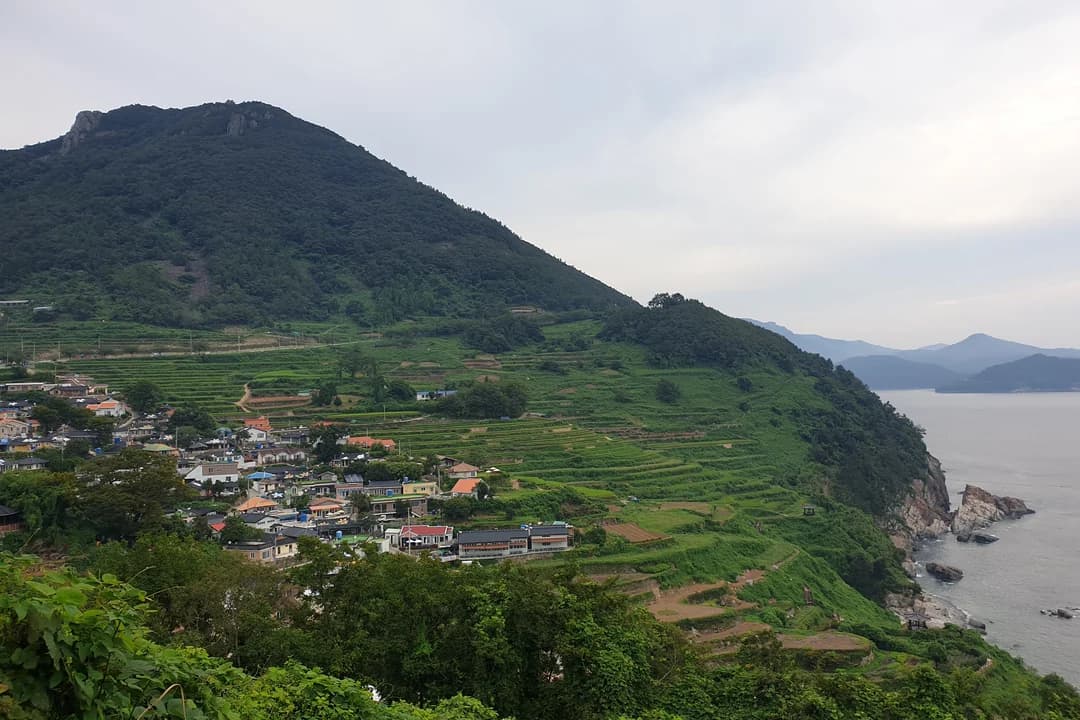
German Village was built from 2001 by Koreans who had worked in Germany and returned, with red-roofed houses on the hillside above the sea; this month it hosts the 14th beer festival, held on 9 to 11 October 2026. Darangi Village (Gacheon) has more than 100 terraced rice paddies stepping down a coastal slope, about 227,000 m² in all and designated a scenic site in 2005; walk the lanes down to the sea and back up (as of 2026-10-11).
Boriam, founded in 683 by the monk Wonhyo on Geumsan, is counted as one of Korea’s three great sea-Gwaneum prayer temples (with Naksansa and Bomunsa), and is known for sunrise and views across islands. A shuttle bus carries visitors from the lower car park to the temple gate because the upper car park is small. Namhae’s garlic is a local brand, celebrated at the Treasure Island Garlic and Korean Beef Festival.
Geoje
Geoje is Korea’s second-largest island after Jeju and has about 233,000 residents. Shipbuilding gives it an industrial side, with Hanwha Ocean in Okpo and Samsung Heavy Industries in Gohyeon, but most visitors come for the coast. The island is reached from Busan by the Busan-Geoje link in about 40 minutes by car or bus, and from the mainland near Tongyeong by a bridge.
Haegeumgang, “sea Kumgang”, is a cluster of sea cliffs and sea caves on the south-east tip, named for its resemblance to North Korea’s Kumgang mountain and reached by sightseeing boat; one of its sea caves, Sipja Donggul, is shaped like a cross. Oedo Botania is a marine botanical garden on the island of Oedo in the national park and is the second most visited attraction on Geoje. Boats to Oedo and Haegeumgang are usually combined and depend on the sea state.
The Geoje POW Camp Historic Park preserves part of the camp that held mainly captured North Korean and Chinese soldiers from 1951 to 1953 during the Korean War. A May 1952 uprising there inspired the novel War Trash by Ha Jin. The park combines exhibition halls and reconstructed scenes of camp life; allow about two hours and treat it as a place of memory rather than a thrill.
Jinju: fortress and lanterns
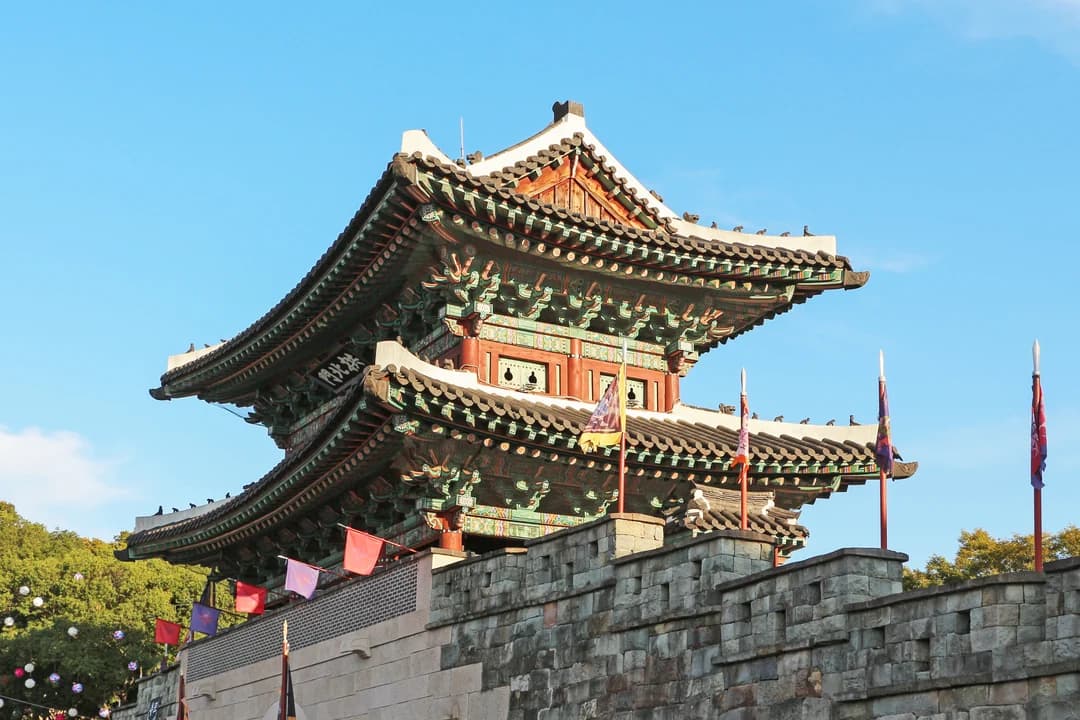
Jinju sits on the Nam River and is best known for Jinjuseong, the fortress where Korean defenders held off a Japanese army in the first siege of October 1592 and where the garrison and much of the population were lost in the second siege of 1593. Inside the walls are the cliff-top Chokseongnu pavilion over the river and the Jinju National Museum, the first national museum in Gyeongnam, which opened in 1984. Plan two to three hours.
The Namgang Yudeung Lantern Festival is held each October on the river around the fortress, to remember the victims of the siege and the Imjin War; floating lanterns on the Nam River go back to the lamps used as signals in 1592 and to the custom of floating lanterns for the dead afterwards. The 2026 edition runs from Saturday 3 October to Sunday 18 October 2026, and the lantern exhibition hall’s “Yudeung Festa” runs on the same dates and is closed on Mondays (as of 2026-10-11).
Getting around during the festival: the intercity bus terminal is close to the festival grounds, the express bus terminal is within walking distance, Jinju Station has festival shuttle buses, and on weekends and holidays the roads are very congested, so buses and trains work better than cars. The festival grounds lie along the Nam River around the fortress, so crowds are heaviest on the riverbank after dark.
Jinju’s food is famous: Jinju bibimbap, with a colorful ring of vegetables and raw seasoned beef (yukhoe) and sesame oil, sometimes called flower rice; Jinju naengmyeon, cold noodles in a seafood broth topped with pan-fried beef; and grilled eel from the Nam River. Cheonhwang Sikdang, founded in 1927, is one of the oldest restaurants still operating in Korea. In May the Nongae Festival remembers a courtesan who became a legend of the siege.
Hadong and Hwagae: tea valley and the Seomjin River
Hadong lies between Jirisan and the Seomjin River, and the county has tea-growing traditions that date to the Silla period. The county tourism office names ten scenic views, among them the ten-ri cherry-blossom road in Hwagae, sunrise and the sea of islands from Geumosan, autumn at Ssanggyesa temple, the Choi Champan house, royal-azalea slopes at Hyeongjebong, Samseonggung in Cheonghak-dong, Bulil Falls, Hadong harbor and the Seomjin as seen from Seomhojeong pavilion.
The cherry road in Hwagae (Samsin-ri, along local road 1023) is free to walk and blooms in spring, from around the start of March in a mild year. Hwagae is also the starting point for wild-tea fields on the hills and for Ssanggyesa, the old Jogye-order temple at the head of the valley. Pyeongsa-ri in Akyang is the village where Pak Kyongni’s novel Toji (Land) is set, and a replica of the fictional Choi family house stands there, with a broad rice plain below.
The area also offers Hadong Rail Park, a Geumosan zipline and a cable car over the water, and in autumn the scarecrow art event at Dongjeongho lake in Akyang-myeon from 3 October to 8 November 2026. The spring wild-tea festival is held in May. Hwagae sits across the river from Gurye in Jeolla, so many travelers combine Hwagae, Ssanggyesa and Hwaeomsa on one day (as of 2026-10-11).
Changwon and Jinhae
Changwon is the provincial capital, formed in July 2010 by merging the old cities of Changwon, Masan and Jinhae. Jinhae, a former naval town that still hosts the Navy Academy and fleet bases, is the destination: its cherry-blossom festival, the Jinhae Gunhangje, lasts ten days around the first week of April and covers an estimated 340,000 cherry trees, drawing more than a million visitors a year.
The two best-known viewing spots are the Yeojwacheon stream, where the blossoms are lit at night and umbrellas and lanterns decorate the banks, and the old Gyeonghwa railway station, with its blossom-lined track. Both are crowded at festival time, so arrive early or on a weekday. Buses link Changwon Jungang Station with Jinhae; the festival is a spring event only, so there is no cherry-blossom viewing in October.
In autumn the town to visit is Masan, in the Masan Habpo district of Changwon. The 26th Masan Gagopa Chrysanthemum Festival runs there from 31 October to 8 November 2026, and a special lecture series on the 1979 Bu-Ma democratic uprising is running at the Democracy Hall until 16 October 2026 (as of 2026-10-11).
Hapcheon: Haeinsa and the Tripitaka Koreana
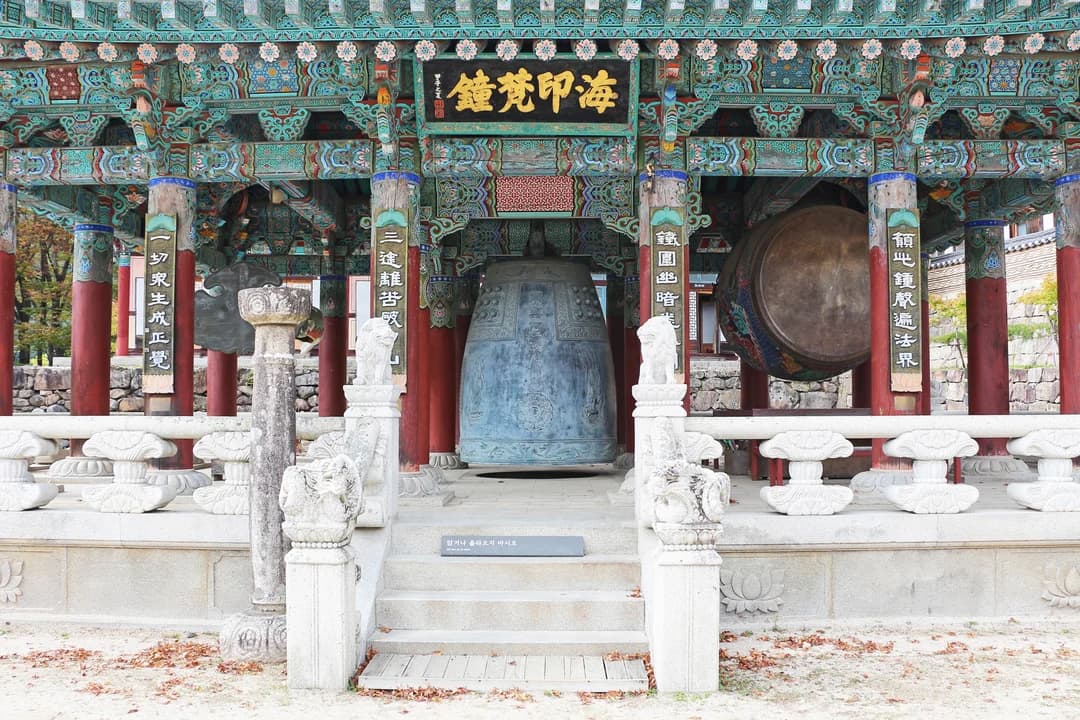
Haeinsa, in Gayasan National Park near Hapcheon, was first built in 802 and is the home of the Tripitaka Koreana, the Buddhist canon carved on more than 81,000 woodblocks in the 13th century. The Janggyeong Panjeon, the storage halls that keep the blocks in the open air, are National Treasure No. 32 and were inscribed on UNESCO’s World Heritage list in 1995.
The halls are viewed from the courtyard and from outside the railings; the woodblocks themselves are not handled, and the buildings are the main interest. The temple also runs a temple-stay program. The approach from the car park to the halls is an uphill walk. Haeinsa is remote, so combine it with Hapcheon or a car-based loop rather than a quick stop from the coast.
Gaya sites, Tongdosa and other day trips
Gyeongnam holds five of the seven sites of the Gaya Tumuli, inscribed on the UNESCO World Heritage list in 2023, which preserve the burial mounds of the Gaya confederacy: Daeseong-dong in Gimhae, Marisan in Haman, Okjeon in Hapcheon, Songhak-dong in Goseong and Gyo-dong in Changnyeong. The other two are in North Gyeongsang and North Jeolla. The mounds are quiet hill walks rather than museums, so pair each with its local museum.
Tongdosa, near Yangsan, was founded in 646 by the monk Jajang and is one of Korea’s Three Jewel temples, standing for the Buddha. It has no Buddha statue in the main hall: Daeungjeon, National Treasure No. 290, faces a diamond altar (Geumgang Gyedan) behind it that enshrines relics. It was inscribed with six other mountain monasteries in 2018. The walk in along a pine-lined path is part of the experience.
Other day trips include Changnyeong, with the Upo Wetland, Bugok hot springs and Hwawangsan; Miryang, with the Yeongnamnu pavilion; Haman, known for its summer water-fireworks festival; and Gimhae, close to the airport. All of them are small counties that are easiest by car or by a bus from the nearest rail town. Eden Valley Resort in Yangsan is a ski resort and is covered in the ski guides.
Food and what to eat
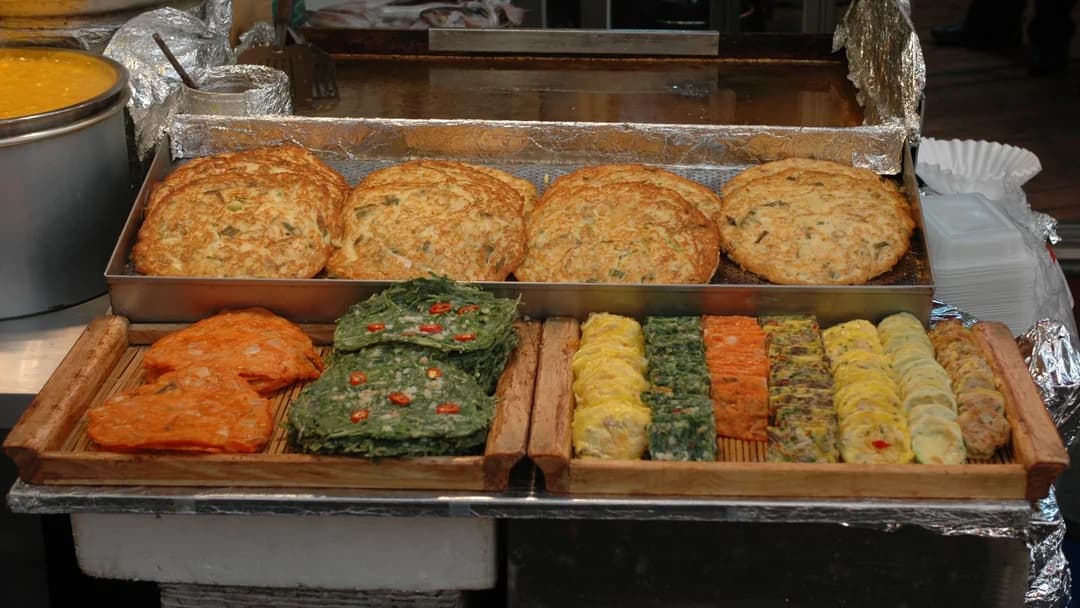
The coast means seafood, and the best way to eat it is at a harbor restaurant where the day’s catch is displayed. In Tongyeong, order chungmu gimbap with spicy squid or small octopus, and look for oysters in the colder months, plus sea bream, mackerel and the rice-and-seaweed dishes of the fishing villages. Namhae adds anchovy, and its garlic appears in many dishes.
Inland, Jinju gives bibimbap with raw beef, naengmyeon and river eel. Hadong specializes in tea and in river fish from the Seomjin, including freshwater clams and eel dishes. Hapcheon is known for pork-soup rice. Because every town has favorite diners, ask your hotel or the tourist desk for the recommended restaurant near you rather than choosing by photos on the street.
Seafood tips: raw fish is served by weight with side dishes, so ask the price per portion first; avoid raw shellfish in summer unless the place is busy; and say clearly if you are allergic to shellfish, as fish sauce and seafood broth appear in many soups. Vegetarians will do best at temple restaurants near Haeinsa and Tongdosa.
Markets and shopping
The traditional market by Tongyeong’s Gangguan harbor is the place for dried and fresh fish, and the streets around it sell local crafts. Tongyeong is also known for lacquered mother-of-pearl furniture and lacquerware, and the city keeps a craft tradition from its naval workshops. Cheap, fresh food is at the night stalls near the harbor; try small bites rather than a sit-down meal if you are on a tight schedule.
Souvenirs follow local products: Hadong green tea and wild tea, Namhae garlic and dried anchovy, Tongyeong seafood and seaweed, Jinju silk, and handmade crafts from Hapcheon. Hadong’s traditional markets and Hwagae’s tea shops are the best places for tea. Pack perishables in a cooler bag, and check an airline’s rule on liquids before carrying sauces.
Festivals and seasonal highlights
October 2026 is a busy month. The Namgang Yudeung Lantern Festival in Jinju runs from 3 to 18 October, the German Village beer festival on Namhae runs from 9 to 11 October, and the scarecrow art event at Dongjeongho in Hadong runs from 3 October to 8 November 2026 (as of 2026-10-11).
Coming up: Tongyeong holds a pet-culture festival and the Gran Fondo cycling event on 17 October 2026 and the 4th Sanyang Island Sunset Culture Festival on 24 October. Changwon’s 26th Masan Gagopa Chrysanthemum Festival runs from 31 October to 8 November 2026 in Masan Habpo district. A night food market called Hwajeonya:jang opens in Namhae on 20 October 2026 (as of 2026-10-11).
The usual annual pattern: cherry blossoms in Hwagae and Jinhae from late March to early April, the Tongyeong International Music Festival in spring, the Nongae Festival in Jinju in May, the Hadong wild-tea festival in May, the Namhae garlic and beef festival in spring, the Hansan Great Victory Festival around the anniversary of the 1592 battle, and the Admiral Yi Sun-sin commemorative festival in Namhae. Dates for next year are announced each year and this guide is updated when they are confirmed.
Where to stay
Tongyeong is the best base for the sea: stay near the Gangguan harbor for walking access to Dongpirang, the market and the night walks. Jinju suits a stay near the river for the festival and the fortress. Namhae and Hadong reward an overnight in a pension or guesthouse near Sangju, Darangi Village or Hwagae, because the quiet evenings and sunrise are the main reward.
Book early for festival weekends, spring blossom weeks and holiday periods, since small towns have limited rooms. Check whether breakfast is served, as many pensions have none and shops open late. A rental car is much more useful if you base yourself outside the town centers.
Accessibility and families
Hillside sights such as Dongpirang, Darangi Village and Hwagae’s tea slopes are steep and have stairs; the Tongyeong cable car and Hadong’s cable car reduce climbs, and Jinju Fortress is mostly level with ramps near the river gate. Haeinsa and Tongdosa have long, gently sloping approaches, and shuttle options vary, so ask the ticket desk. Beaches such as Sangju and Songjeong Solbaram are good for families with strollers.
Children enjoy boat rides, the Oedo garden, beaches, the Geoje POW exhibition (with parent guidance on the subject), and Hadong’s rail park. Older visitors will find the sea-view cable cars and short harbor walks easier than the steeper sights. Allow generous time on islands, since the return ferry can be the limiting factor.
Weather and sea conditions
The coast is warmer than inland Korea in winter, with a January mean of about 2 °C on Namhae, and humid in summer with a mean near 26 °C in August. Rain falls mostly from June to September. Spring and autumn are dry and clear for island views, but sea fog in spring and strong winds in winter can stop ferries.
Typhoons usually affect the south coast in August and September, and heavy rain can close mountain trails and coastal roads. On islands, carry a light windbreaker even in summer, and leave extra time before the last ferry.
Safety and etiquette
At the Yi Sun-sin and Jinju siege sites and the Geoje POW camp, behave as you would at a memorial. At temples such as Haeinsa and Tongdosa, speak quietly, do not photograph worshippers, and stay behind rope lines near the woodblock halls and the diamond altar. On cliffs, sea caves and tidal rocks, follow signs and staff directions, and do not climb over barriers for photographs.
For emergencies, dial 112 for police and 119 for fire and ambulance; the 1330 tourist hotline offers interpreter help. On boats, wear a life jacket whenever staff ask, do not stand at the edge of the deck, and check that the return sailing is confirmed before you land on an island. Keep to marked paths on tidal flats, and watch the tide.
3-day itinerary
- Day 1, Jinju: KTX from Seoul (about 3 h 15 min to 3 h 30 min) or a bus from Busan (about 1 h 20 min). Lunch on Jinju bibimbap, then Jinjuseong fortress and the National Museum in the afternoon. In the evening, walk the lanterns on the Nam River (the festival runs until 18 October 2026) and eat river eel or cold noodles.
- Day 2, Tongyeong: Morning bus from Jinju to Tongyeong (about 1 h 10 min). Walk Gangguan harbor and the central market, climb through Dongpirang, then ride the cable car up Mireuksan for the view of the park islands. Eat chungmu gimbap for lunch and fresh seafood for dinner, and stroll the harbor after dark.
- Day 3, Hansando or Geoje: Take the ferry from Tongyeong’s passenger terminal to Hansando (about one sailing an hour) to see Jeseungdang and the memorial shrine, then return and travel on to Busan by direct bus (about 1 h 30 min to Sasang) or to Geoje for Oedo and Haegeumgang. Check the last ferry back before you board.
5-day itinerary
- Day 1, Jinju: arrive by KTX or bus, see Jinjuseong and the National Museum, then the lantern festival after dark (until 18 October 2026) or the riverside at night in other weeks.
- Day 2, Tongyeong: bus to Tongyeong (about 1 h 10 min), the harbor and market, Dongpirang, the cable car and chungmu gimbap. Overnight in Tongyeong.
- Day 3, Hansando and Geoje: morning ferry to Hansando and the Jeseungdang site, then onward to Geoje by road to see the POW camp park or Oedo and Haegeumgang by boat. Overnight in Geoje or return to Tongyeong.
- Day 4, Namhae: travel to Namhae (allow most of the morning for the transfer). Visit German Village, Darangi Village and the coast road, and Boriam for sunset or sunrise the next morning. Overnight on Namhae.
- Day 5, Hadong and Hwagae: cross Namhae Bridge to the mainland, walk the tea slopes and Ssanggyesa at Hwagae, and see the Toji village at Pyeongsa-ri. From Hadong take a bus to Jinju or Busan, or continue to Gurye in Jeolla for Hwaeomsa.
Tips
Book KTX seats ahead for weekends and festival dates, but buses can usually be bought on the day. Keep Hangul names on your phone for the taxi: Dongpirang (동피랑), Tongyeong cable car (통영케이블카), Jinjuseong (진주성), German Village (독일마을), Darangi Village (다랭이마을), Boriam (보리암) and Haeinsa (해인사).
Choose a theme and keep to it: a naval-history route through Tongyeong, Hansando, Namhae and Jinju; a coast-and-islands route through Tongyeong and Geoje; or a temples-and-tea route through Hapcheon, Hadong and Yangsan. Mixing all three leads to long bus days.
Pack layers and a windbreaker for the coast, comfortable walking shoes for steep lanes, and a small amount of cash for market stalls and small ferries. Charge your phone before boat days, and store the return ferry time in your notes.
Sources and last update
Last updated: 11 October 2026. Figures are as of the date shown.
Source: Jinju City · Namhae County · Hadong County · Changwon City · Tongyeong City · Wikipedia · Namuwiki · Checked 11 Oct 2026
Written by HOLIDAY in its own words from official public information. This is not an official publication of the Korea Tourism Organization or any government body.
HOLIDAY refreshes this article regularly as fares, hours and event dates change.