
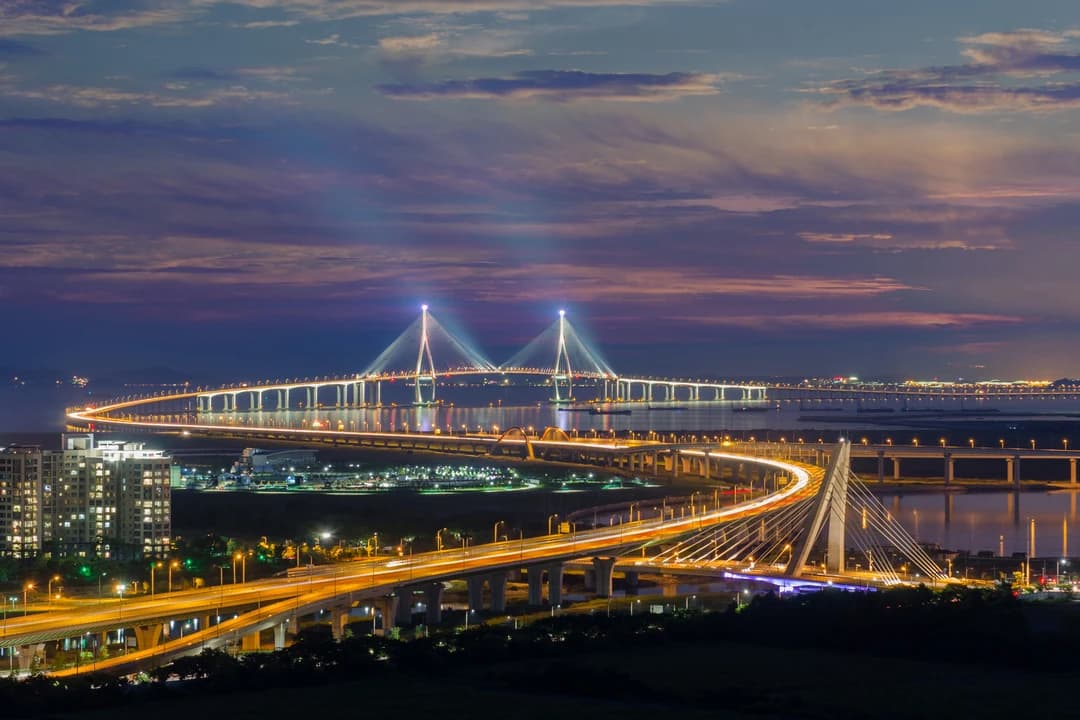
Chinatown and the Jajangmyeon Museum, the Open Port quarter, Wolmido, Songdo, Yeongjong, Ganghwa and the islands, with airport transfers, fares, festival dates and 3- and 5-day plans.
Overview
Incheon is South Korea's third-most-populous city, home to about three million people. It lies on the Yellow Sea just west of Seoul and covers roughly 1,060 square kilometers: the old port quarter, the reclaimed business district of Songdo, Yeongjong Island with Incheon International Airport, Ganghwa Island and a scatter of ferry-served islands further out.
The port opened to foreign trade in 1883, and a Chinese settlement followed in 1884, which is why the Open Port quarter around Jayu Park and Chinatown still has Western, Japanese-era and Chinese buildings side by side. On 15 September 1950 United Nations and South Korean troops landed at Wolmido in a turning point of the Korean War.
The city suits layover travelers, first-time visitors who want a calm day outside Seoul, and anyone who wants sea air, history and food in one trip. Allow one day for the old port and Wolmido, half a day for Songdo, and a full day for Ganghwa. A reorganization of districts took effect on 1 July 2026: the old-town part of Jung-gu and Dong-gu were merged into a new district called Jemulpo-gu, and Yeongjong gets its own district, so some maps and signs may still show the earlier names (as of 2026-10-11).
Best time to go
Spring and autumn are the most comfortable. Incheon has a humid, maritime climate: the annual average high is about 16.6 °C and the average low about 9.1 °C, annual rainfall is about 1,200 mm, and July is the wettest month at roughly 340 mm. Winters can be very cold with sea wind, and the record low is about minus 21 °C.
April brings the azalea festival on Ganghwa Island; early October is festival season in the port quarter, with the Chinatown jajangmyeon festival, the Sorae Port festival and the Open Port heritage night walk all running in the first half of October 2026. Summer suits beaches and the islands but brings heat, humidity and the rainy season, and ferries can be canceled in rough weather.
Getting there
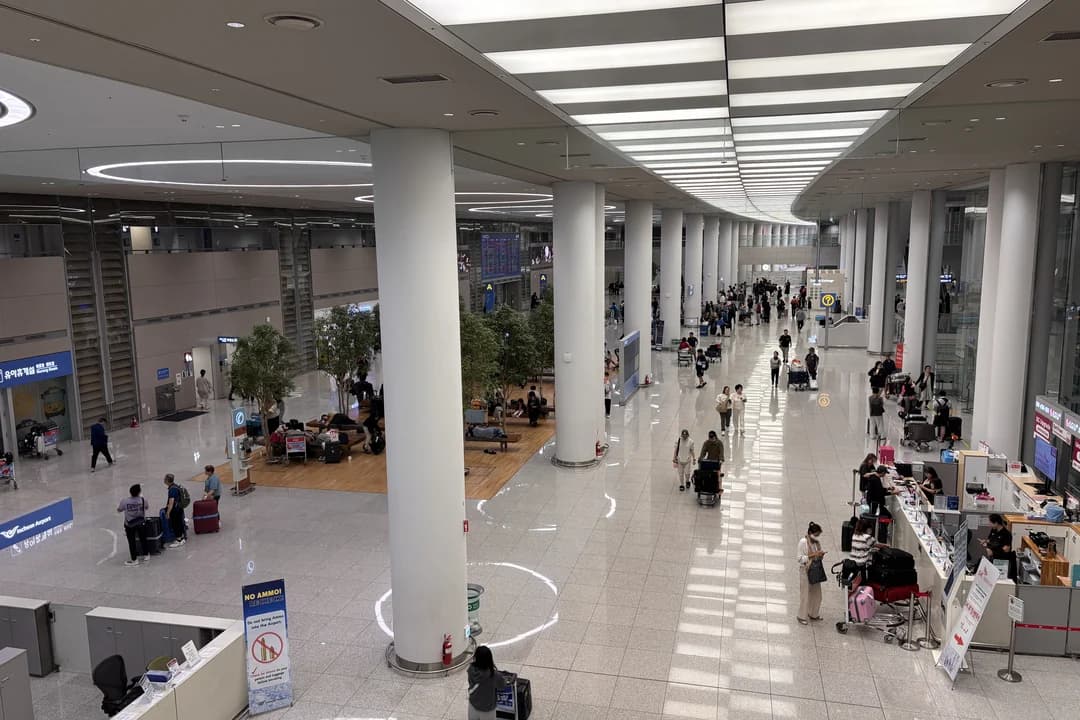
From Incheon International Airport the airport railroad is the simplest way into Seoul and onward. The non-stop express to Seoul Station takes 43 minutes from Terminal 1 and 51 minutes from Terminal 2; the all-stop train takes 59 and 66 minutes. The express adult fare is ₩13,000 (as of 2026-10-11), while the all-stop train works with a transport card. The airport is on Yeongjong Island, so one way to reach Chinatown and the Open Port area is to ride the railroad towards Seoul Station and change to Metropolitan Subway Line 1 for Incheon Station, the terminus; a taxi or an airport bus is the alternative.
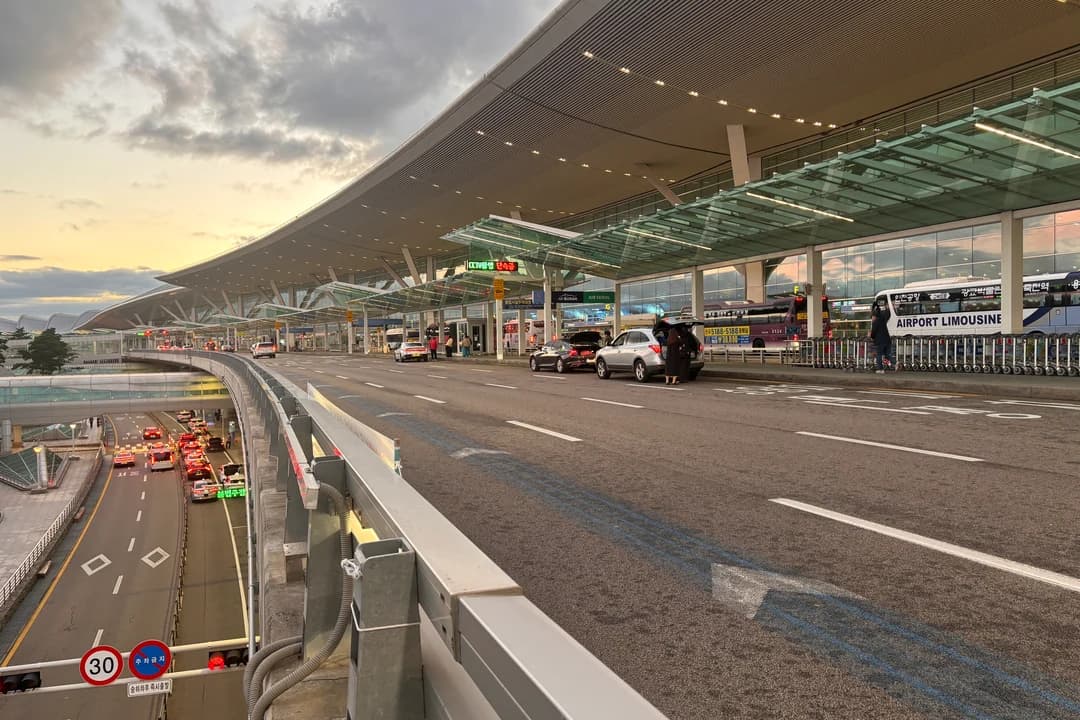
Taxis start at ₩4,800 on the meter for ordinary Seoul, Gyeonggi and Incheon cars (as of 2026-10-11), with night surcharges of 20 to 40 per cent between 22:00 and 04:00. Use only the marked taxi stands and avoid unmarked vans offering rides in the arrivals hall. Airport buses leave from the first-floor curb of Terminal 1: Seoul-bound buses outside exits 3 to 7, Gyeonggi buses outside exits 7 to 10, other-region buses outside exits 11 to 13 and Incheon buses outside exits 2 to 3 and 13 to 14.
From central Seoul, Metropolitan Subway Line 1 (the Gyeongin line) runs from Guro to Incheon Station, and the Suin line from Suwon also ends at Incheon Station. Intercity buses arrive at the Incheon Intercity Bus Terminal in Michuhol-gu. Ferries to the Yellow Sea islands leave from the Incheon coastal passenger terminal.
Getting around
Incheon Subway Line 1 runs from Geomdan Lake Park to Songdo Moonlight Festival Park with 33 stations, and Line 2 runs from Geomdan Oryu to Unyeon with 27 stations. The base fare is ₩1,550 for an adult within 10 km with a transport card and ₩1,650 with a single-use card (as of 2026-10-11). The airport railroad meets Line 1 at Gyeyang and Line 2 at Geomam, and Seoul Metro Line 1 meets Line 1 at Bupyeong.
City buses on trunk routes cost ₩1,500 with a card and ₩1,600 in cash (as of 2026-10-11). The Metropolitan Line 1, the Suin line and Seoul Line 7 also serve Incheon. For sightseeing, a tourist-oriented city tour bus circulates between the main sights, and the Wolmi Sea Train, the Wolmi seal car and the Songdo canal water taxis are attractions in their own right.
Chinatown and the Jajangmyeon Museum
Incheon Chinatown stands directly in front of Incheon Station and is the only officially designated Chinatown in Korea. It grew out of the Chinese settlement set up in 1884 after the port opened. A tall Chinese-style gate marks the entrance, and the streets are lined with red lanterns, restaurants, souvenir shops, a Chinese school building dating from 1934 and a street of tile murals telling scenes from the Romance of the Three Kingdoms.
The Jajangmyeon Museum, which opened on 28 April 2012, occupies the rebuilt Gonghwachun building, the Chinese restaurant regarded as the first in Korea to serve jajangmyeon around 1905. It has six permanent exhibition halls and a special hall that follow how the Shandong dish of black-bean noodles became a Korean everyday food. Allow 45 to 60 minutes for the museum and a couple of hours for the whole quarter.
The area sits in the new Jemulpo-gu. Typical snacks are gonggalppang (hollow sweet bread), mooncakes, kkansyo shrimp in chilli sauce and sweet-and-sour pork. Weekends are crowded, so weekday mornings are calmer. Each September there is a Chinese-culture festival and the Incheon jajangmyeon festival takes place in early October (3 and 4 October in 2026).
Open Port area and Sinpo
Behind Chinatown the hill of Jayu Park, founded in 1888 and described as the first Western-style park in Korea, looks over the harbor. Around it are former bank branches turned into the Incheon Open Port Museum and the Open Port Modern Architecture Exhibition Hall, a stair marking the boundary of the old Chinese and Japanese settlements, Incheon Art Platform and a walking route called the Open Port Nurigil. The streets are best covered on foot in two to three hours.
Sinpo International Market is a few minutes away. It is described as Incheon's first modern permanent market, with about 162 shops, and it is the birthplace of dakgangjeong, crisp fried chicken in a sweet glaze. It is open 10:00 to 21:00 and closes on the first Monday of each month and on Seollal and Chuseok (as of 2026-10-11). Popular dakgangjeong shops queue from early morning, so go before noon.
In the evening the Open Port Heritage Night Walk turns the district into a night-time program of lit buildings, drone and media-art shows, stamp tours, a night market and heritage openings with guides. The 2026 edition ran from 9 to 11 October, 18:00 to 22:00, free of charge, and is held each year in the autumn.
Wolmido
Wolmido is a small island about a kilometer off the port, joined to the mainland by a road since 1989. It is a weekend seaside strip of seafood restaurants, a theme park with a Viking ship, a Ferris wheel and the spinning Disco Pang Pang ride, and the Korean Traditional Garden in Wolmi Park, which opened to the public in 2001 on a former army base. Sunset over the sea is the best moment, and gulls follow the pleasure boats.
The Wolmi Sea Train is a monorail loop of 6.1 km that takes about 42 minutes, at a height of 7 to 18 m, with views of the inner harbor, the Yellow Sea and Incheon Bridge. A ticket allows two rides a day. Adult fares are ₩11,000 on weekdays and ₩14,000 at weekends, teenagers and seniors pay ₩8,000 and ₩10,000, and children pay ₩7,000 and ₩8,000 (as of 2026-10-11). From April to October it runs 10:00 to 18:00 Tuesday to Thursday and 10:00 to 19:00 Friday to Sunday and on holidays; from November to March it runs 10:00 to 18:00. It is closed on Mondays.
The Wolmi seal car shuttles inside Wolmi Park every 20 minutes from 10:00 to 17:00, except Mondays and the 12:00 to 13:00 break (as of 2026-10-11). Boat cruises under Yeongjong and Incheon bridges leave from the Wolmido quay. A good half-day is: Chinatown in the morning, Wolmido for lunch, sea train and sunset.
Songdo
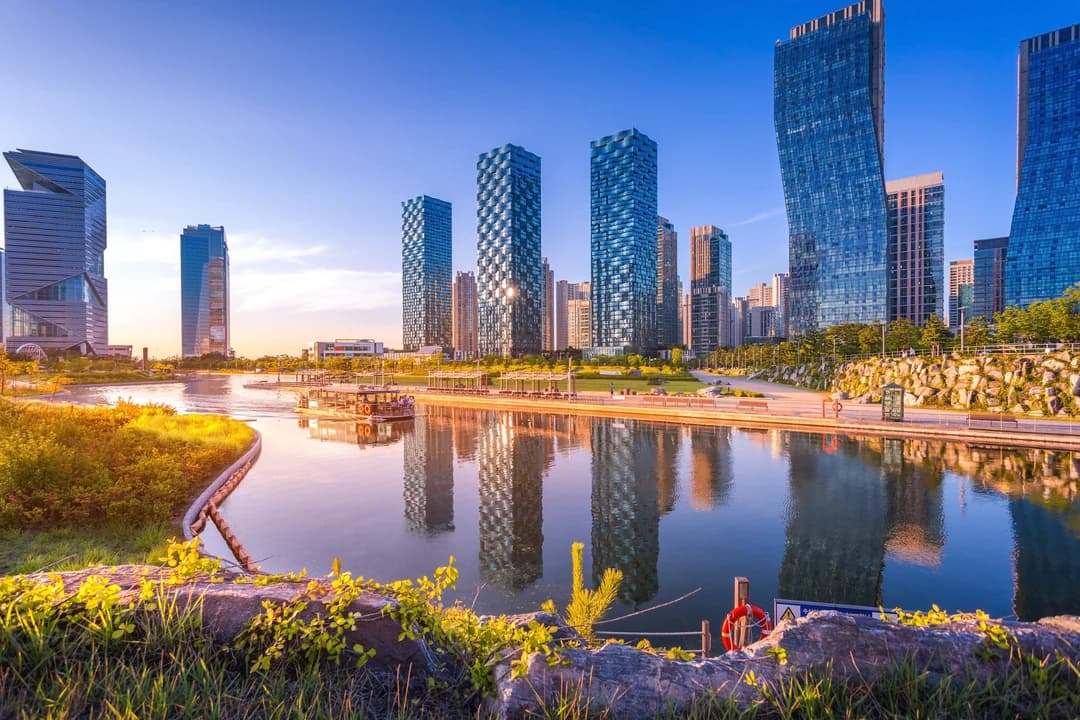
Songdo International Business District is a planned city on about 600 hectares of reclaimed land. It is part of the Incheon Free Economic Zone, which was designated in 2003 as Korea's first. Subway Line 1 runs through it to the terminus at Songdo Moonlight Festival Park. The convention center Convensia is described as the first LEED-certified convention hall in Asia, and the glass-and-steel Tri-Bowl is a concert hall and photo spot.
Songdo Central Park covers about 370,000 square meters and is said to be Korea's first park fed with seawater. A canal 1.8 km long and up to 110 m wide runs through it, with themed gardens, a hanok village, sculptures, and east and west boathouses offering water taxis, kayaks, canoes and family boats. A 33rd-floor viewing deck in the IFEZ promotion hall overlooks the park and Incheon Bridge. Entry is free, and the facilities are listed as open 10:00 to 19:00 on weekdays and 10:00 to 21:00 at weekends all year (as of 2026-10-11). The park looks best at dusk and after dark.
Yeongjong Island and the airport island
Yeongjong is the sixth-largest island in Korea, about 115 square kilometers, formed when four islands were joined by dikes between 1992 and 1994 to make room for the airport. Only two links lead to the mainland, Yeongjong Bridge and Incheon Bridge, and both charge tolls. A bridge to Muuido opened in 2019. Four ferry piers serve the island, including the old-town pier at Gu-eup.
Beyond the airport the island offers Maesian beach, Eurwangni beach, the Wangsan marina for yacht experiences, a big integrated resort with a large pool complex, and a newer entertainment resort with a night market. Sinsimodo, a small island reached in about 10 minutes from Yeongjong, has sculptures along its beaches. Tidal flats are broad here, so check the tide before walking out.
Ganghwa Island
Ganghwa is the fourth-largest island in Korea, about 300 square kilometers, joined to Gimpo by road bridges at the mouth of the Han River. For the Goryeo court it was a refuge during the Mongol invasions, when the capital moved here and the Tripitaka woodblocks were carved; Joseon built 53 coastal forts, and in 1866, 1871 and 1875 French, American and Japanese ships attacked it, ending in the 1876 treaty named after the island. The Gapgot and Gwangseong forts and Chojijin are the main fortified sites.
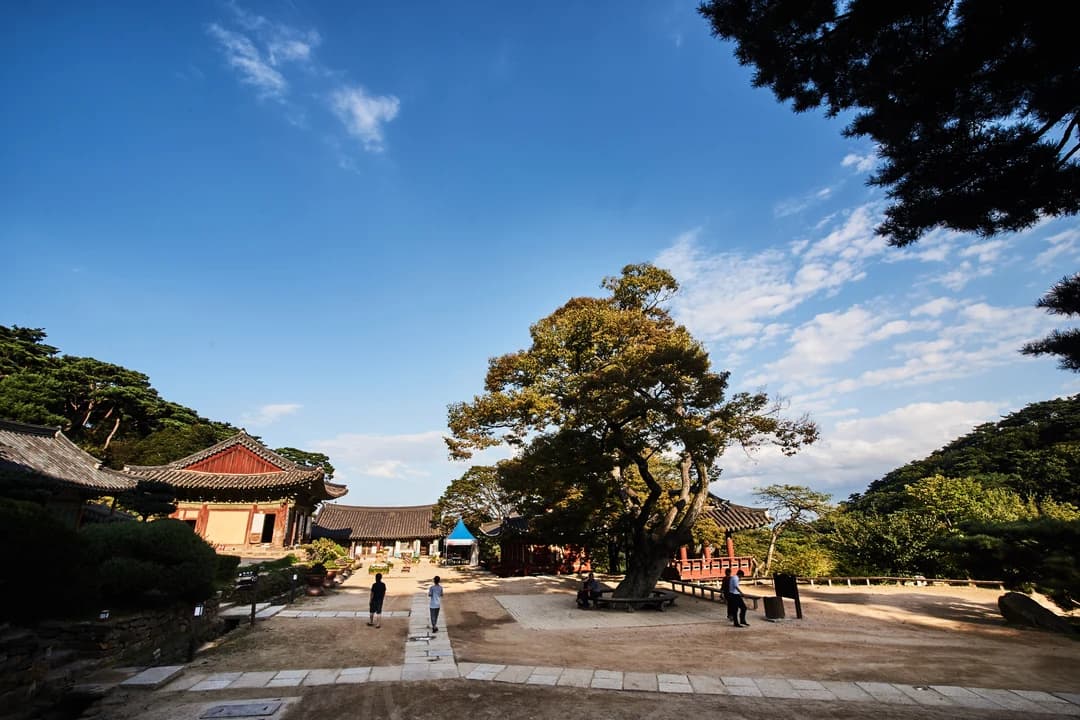
The Ganghwa dolmens are part of the UNESCO World Heritage listing of 2000 shared with Gochang and Hwasun. The Bugeun-ri dolmen, a Historic Site since 1964, has a granite cover stone 6.5 m long, 5.2 m wide and 1.2 m thick on a frame about 2.6 m high. Jeondeungsa temple sits inside the Samnangseong fortress on Mt Jeongjoksan; tradition dates its founding to 381. Its main hall (Treasure No. 178), the Yaksajeon hall (Treasure No. 179) and a bronze bell are national treasures, and it runs a templestay program.
Dongmak beach on the south coast has broad tidal flats of about 18 million pyeong around southern Ganghwa, with low-tide mudflat tours, a pine grove and a sunset view from the Bunori fort next to it. It is free and open round the clock. On Seokmodo, Bomunsa temple costs ₩2,000 for adults and is open 07:00 to 19:00 in summer and 07:00 to 18:00 in winter (as of 2026-10-11). Gyodongdo, joined by a bridge since 2014, has the retro Daeryong Market with about 50 shops, built by refugees from Hwanghae Province.
Ganghwa is known for its turnips, which have been grown for over a thousand years, for ginseng, and for the April azalea festival on Mt Goryeo, a salted-shrimp festival in October and a ginseng festival in mid-October. A trip needs a full day; there is no rail line on the island, so buses, taxis or a rented car link the sights.
Islands and ferries
Baengnyeongdo, about 191 km north-west of Incheon and closer to North Korea than to the Korean mainland, is reached by ferry from the Incheon coastal passenger terminal in about four hours. It covers 46.3 square kilometers. The sights are the 50 m cliffs of Dumujin along about 4 km of coast, the firm-packed Sagot beach that once served as an emergency airstrip, the multicolored Kongdol pebble beach and a rock where spotted seals rest. Entry to the sights is free. Island ferries are tied to the weather, so a day-trip is not realistic: plan at least one night.
Other islands in the city's list are Daecheongdo, Deokjeokdo with trekking, beaches and sea fishing, Gulupdo (a favorite of backpackers), Muuido, and Sinsimodo. Tickets for island ferries are sold through the national island-ferry ticketing service of the Korea Shipping Association, and services stop when the wind or waves rise.
Airport layover and stopover options
Incheon Airport runs free and low-cost transfer tours for passengers whose layover is 24 hours or less and who are allowed to enter Korea, either visa-free (with K-ETA where it applies) or with a visa or residence in the United States, Canada, Australia, New Zealand or 32 European countries. Book online or register on arrival, first come first served; bring your passport and both boarding passes, and be at the registration desk at least 30 minutes before the start. Online reservations lapse 30 minutes before departure. Desks are on the first floor of Terminal 1 (near exits 1 and 2, desks 19 to 20) and of Terminal 2 (opposite exit 4, desks 5 to 6), after passport control.
The courses on the current list (all leave from Terminals 1 and 2 except the in-airport one): Royal Heritage and Charm, 5 hours, Tuesday to Sunday 09:00 to 14:00, Gyeongbokgung and Insadong ($3; Changdeokgung replaces the palace on Tuesdays); Embracing Peace on Divided Land, Wednesday and Friday, free; DMZ Tour, Thursday, $4; The Closest View to North Korea, Monday, free; Fun with the Seagulls, 4 hours, Tuesday, Saturday and Sunday 09:00 to 13:00, free, with the old Yeongjong ferry pier and Wolmi Park; Easy Outing in Incheon, 5 hours, Monday and Tuesday 10:00 to 15:00, free, with two local markets and Sorae Port; Petit Shopping Delight, 3 hours daily 15:00 to 18:00, free, at Sinpo Market; Trendy Hub of Youth, Hongdae, 4 hours; Green Lovers, Seoul Botanic Park, $4; and the 30-minute K-Culture Zone in the Terminal 1 transfer lounge, daily 09:00 to 20:00, free, with hanbok and Hangul crafts (as of 2026-10-11).
For stays of 24 to 72 hours the K-Stopover package bundles one hotel night (twin-share, with a single supplement), airport lounge access, transport and tours; the registration desk after immigration is open 07:00 to 18:00. Refunds step down as the date nears: 100 per cent back seven days before, 50 per cent three days before, 30 per cent two days before and nothing on the day (as of 2026-10-11). Between terminals, the free shuttle bus takes about 15 to 18 minutes every 10 minutes from 05:00 to 23:00, and the airport railroad takes 6 minutes for ₩1,050.
Food and where to eat
Incheon is the home of jajangmyeon: Shandong immigrants adapted a black-bean sauce noodle dish into the version sold in Chinatown from about 1905. Chinatown also offers kkansyo shrimp, fried pork in sweet-and-sour sauce, gonggalppang, steamed buns and tea. The Sinpo market is the place for dakgangjeong, jjolmyeon (chewy cold noodles) and five-color dumplings.
For seafood, Wolmido has raw-fish and grilled-shellfish restaurants facing the sea, and Sorae Port is a fishing harbor known for its fish market and salted seafood; its harvest festival ran from 2 to 4 October in 2026 (as of 2026-10-11). On Ganghwa, look for dishes with the local turnip and ginseng, and at Dongmak and the south coast for clam and tidal-flat dishes. Check the tide tables if you plan a mudflat tour.
Festivals and seasonal highlights
The city calendar for autumn 2026 lists: Sorae Port Festival, 2 to 4 October; Incheon Jajangmyeon Festival, 3 to 4 October; Samrangseong Historical and Cultural Festival at Jeondeungsa, 3 to 11 October, free, with parking at ₩4,000 for cars and ₩8,000 for large buses; Open Port Heritage Night Walk, 9 to 11 October; Neungheodae Culture Festival in Yeonsu, 9 to 10 October (as of 2026-10-11).
Still to come this autumn: Hwadojin Festival, 16 to 17 October; Subongsan Festival, 17 to 18 October; Incheon Sign Language Culture Festival, 17 October; Incheon Film Week, 23 to 25 October; Oslow Vintage Market, 24 to 25 October; and a heritage media-art show running from 14 August to 8 November (as of 2026-10-11). Other regular events are the Chinese-culture festival in September, the azalea festival on Ganghwa in April and the ginseng festival there in mid-October. Dates for next year are announced each year and this guide is updated when they are confirmed.
Where to stay, families and accessibility
Stay near Incheon Station for Chinatown and the Open Port area (small hotels and motels, early ferries and trains), on Wolmido for sea views, in Songdo for modern business hotels near the park, and on Yeongjong for the airport and resorts. Ganghwa has seaside pensions and resorts. A base in Incheon is also practical for Seoul, since Line 1 reaches central Seoul directly.
Families will like the Wolmi theme park, the sea train, the seal car, Songdo Central Park with its boats, and the mudflats at Dongmak. Accessibility: the Wolmi Sea Train has two wheelchair spaces and a lift, Sinpo market has a ramped entrance and a nursing room, Chinatown has accessible parking, and Dongmak has a wheelchair-usable deck. Pets are allowed in Chinatown and in the parks only on a lead with waste bags, and assistance dogs are allowed. Wheelchair taxis can be called on 1577-0320.
Safety and etiquette
Use official taxi stands at the airport; unmarked vans offering rides may overcharge. At tidal flats, ask when the tide turns and stay near the shore. Ferries to the islands stop for wind and waves, so keep a spare day. At temples such as Jeondeungsa and Bomunsa, dress modestly, speak quietly and do not step on the thresholds. Take your litter with you, as bins are scarce on the islands.
3-day itinerary
- Day 1, old port: ride Line 1 to Incheon Station and start at Chinatown and the Jajangmyeon Museum (about 2 hours), lunch on jajangmyeon, climb Jayu Park, walk the Open Port Museum and the Open Port Modern Architecture hall (about 2 hours), then dakgangjeong and snacks at Sinpo Market. In the evening, if it is a festival night, join the Open Port heritage walk.
- Day 2, sea and Songdo: morning ride on the Wolmi Sea Train (42 minutes), seafood lunch on Wolmido, then Line 1 to Songdo for Central Park, the canal water taxi and the IFEZ viewing deck. Stay until after dark for the lit skyline.
- Day 3, Ganghwa: go by bus or taxi to the Bugeun-ri dolmen, then Jeondeungsa and the Samnangseong fortress walls, lunch on the island, and finish with sunset over the tidal flats at Dongmak beach. Return to Incheon or Seoul in the evening.
5-day itinerary
- Days 1 to 3: as above.
- Day 4, Yeongjong: take the airport railroad to the Yeongjong side, visit Maesian beach, cross to Sinsimodo (about 10 minutes by boat) for the beach sculptures, and watch the sun set from the old ferry pier, where gulls follow the boats. Mind the tide.
- Day 5, Seokmodo and Gyodongdo or an island night: spend a second Ganghwa day at Bomunsa on Seokmodo and the retro Daeryong Market on Gyodongdo. If you have more time, leave this day for the ferry to Baengnyeongdo, about four hours each way, and plan at least one night there.
Tips
Carry a transport card for the subway and buses. Many attractions close on Mondays, including the Wolmi Sea Train, so plan Chinatown for that day. Weekends are crowded, so go early. Keep your passport for ferry boarding, because island ferries check identity. The tourist helpline 1330 provides interpreter help.
Sources and last update
Last updated: 11 October 2026. Figures are as of the date shown.
Source: Incheon International Airport Corporation · Incheon Tourism Organization · Incheon Metropolitan City · Incheon Airport Railroad · Checked 11 Oct 2026
Written by HOLIDAY in its own words from official public information. This is not an official publication of the Korea Tourism Organization or any government body.
HOLIDAY refreshes this article regularly as fares, hours and event dates change.