Destination briefing
Why travelers stop here
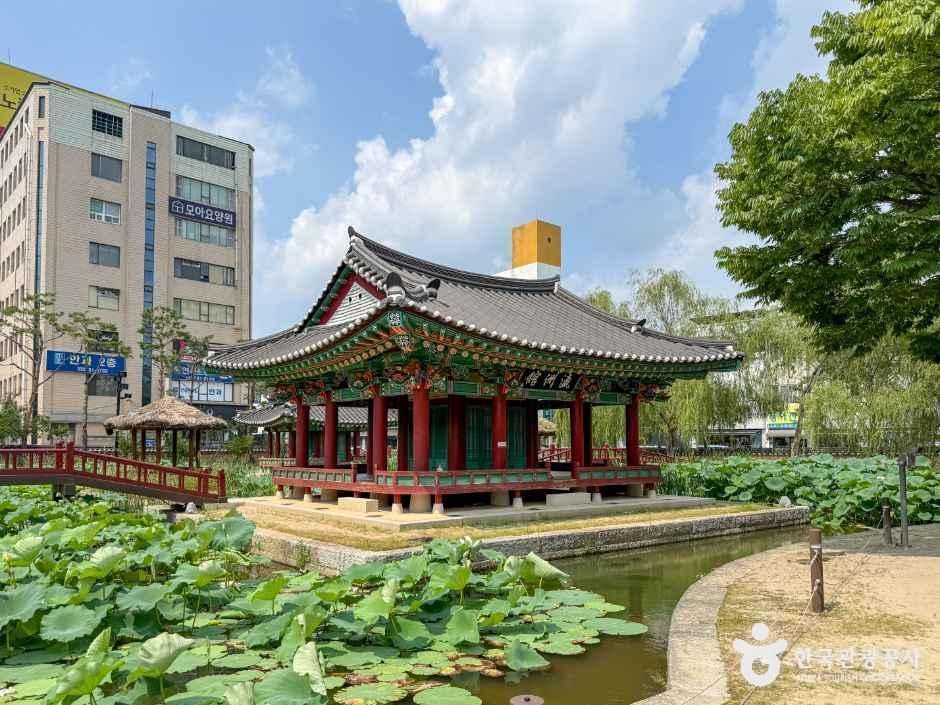
Wonju Hyanggyo was founded at the end of the Goryeo Dynasty, but was burned down during the Japanese invasions of Korea (Imjin War) and rebuilt in 1603, nurturing many scholars and academics. It was severely damaged during the Korean War and was restored to its present state. On January 17, 1985, it was designated as Gangwon Special Self-Governing Province Cultural Heritage Material No. 98, and on November 25, 2022, it was upgraded to Gangwon-do Tangible Cultural Heritage No. 199.
The buildings of Wonju Hyanggyo are arranged in the 'jeonhak-humyo' style (school in front, shrine in the back). In Daeseongjeon, the main shrine hall, Confucius is enshrined as the central figure, along with the Four Sages—Yan Hui, Zengzi, Zisi, and Mencius—and the Two Song Scholars, Zhu Xi and Cheng Hao, as well as 18 Korean sages, totaling 25 spirit tablets. There are also Dongmu (East Shrine) and Seomu (West Shrine) built to house the spirit tablets. In the lecture area, there is Myeongnyundang, where students studied, and Dongjae (East Dormitory) and Seojae (West Dormitory), which served as lodgings for students.
OTA-ready stop
Built into inbound routes and day-tour planning.
Local context
강원특별자치도 원주시 향교길 37-1 (명륜동)
Travel fit
Attraction · Gangwon-do



![[baengnyeongage]bokchueotang](http://tong.visitkorea.or.kr/cms/resource/94/2616194_image2_1.jpg)
![[Early bird] Elysian Gangchon Ski & Snowboard Gugok Ice Wall Tour](/_next/image?url=https%3A%2F%2Fadmin.holidaykr.com%2Fapi%2Fadmin%2Fsystem%2Fbasic-settings%2Ffavicon%3Fpath%3D%252Fuploads%252Fproducts%252Fthumbs%252F750_1791455110103_file1.jpg&w=3840&q=75)